Insights · Focus
Why I Say No to More Businesses Than I Build
For every venture that gets registered, several are argued about and abandoned. The discipline is not in starting things — it is in the ones you refuse.

The part of building a portfolio that nobody photographs is the refusing. For every business that gets registered, several are researched, argued about and dropped — and the dropping is where most of the judgement lives.
This is not the same as being cautious. I start things regularly. But an idea being good is not a reason to start it, and the gap between those two propositions took me two companies to find.
Good ideas are the cheapest thing available
Anyone who has been in business for a decade has more viable ideas than they will ever act on. Gaps in markets are genuinely everywhere once you are looking, and each of them is real.
This produces a specific error. Because the idea is genuinely good, saying no feels like a failure of nerve. It is not. The scarce resource was never ideas — it is attention, and every yes spends attention permanently while every no costs only a moment of regret.
Once I understood that the constraint was capacity rather than opportunity, refusing stopped feeling like timidity and started feeling like arithmetic.
The three tests
- Can it reuse what exists? The same entity, standards, systems and rhythm. If it needs an entirely new apparatus built around it, the true cost is several times what it appears to be at the moment of enthusiasm.
- Can somebody else run it? Not immediately — eventually. If the honest answer is that it only works while I personally attend to it, I have not found a business. I have found a job, and I already have one.
- Would I still want it in year three? Not the launch. The ordinary Tuesday in the third year, when it has become routine and nothing about it is novel any more.
Most ideas fail the second or third test, and almost none of them fail because they were bad. That is the uncomfortable part.
What a yes actually commits you to
Starting is one afternoon of decisions. Running is a recurring obligation measured in years: the filings, the customers, the standards, the person answerable when you are elsewhere, the quiet monthly cost of a thing existing at all.
Founders consistently price the afternoon and not the years. I did, twice. The enthusiasm at the start is real and it is also a terrible estimator, because it is generated by novelty and novelty is the one input guaranteed to run out.
Starting is an afternoon. Running is a decade.
Refusing well
There is a craft to it, and it matters more than it sounds.
Say no early, before anyone has invested effort on the strength of your interest. Say it with the actual reason — capacity, fit, or that it does not reuse what we have — rather than a vague deferral, because a vague no is really a request for someone to keep hoping. And say it without pretending the idea was poor, if it was not.
Refusing well is also commercially useful, though that is not why to do it. The people I have turned down clearly and quickly have sent me more good introductions than the ones I strung along politely.
The cost, stated honestly
Some of what I have refused has gone on to work for other people. I have watched it happen and it is not a comfortable experience.
The discipline is only worth anything if it survives that. A rule you abandon for the exciting case is not a rule; it is a preference wearing a rule's clothing, and it will be abandoned again for the next exciting case. The whole value comes from its being applied when you do not feel like applying it.
I also accept that this method will never produce the largest possible portfolio. It is designed to produce one where nothing is quietly failing while I look elsewhere, and I am confident that is the better trade.
What the no protects
Every business already running deserves the standard it was promised. Adding a new one does not cost nothing — it draws attention from somewhere, and the somewhere is always an existing business that will not complain about it until the damage is visible.
So the refusal is not really about the idea being turned down. It is about the ones already carrying my name, being run to a standard I can still defend. That is what the empty capacity is for, and it is the least glamorous and most important thing on the list.
How to tell enthusiasm from evidence
The hardest part of refusing is that a good idea generates real physical enthusiasm, and enthusiasm is extremely convincing from the inside.
Two habits help. The first is to wait a fortnight before committing to anything new, and to write down at the beginning what I expect to still believe at the end. Enthusiasm rarely survives two weeks intact; conviction does. The gap between the two is the most useful diagnostic I have.
The second is to describe the idea to somebody who has no reason to be encouraging, and to pay attention to which part I find myself hurrying past. There is almost always one — a cost, a dependency, an assumption about demand — and hurrying past it is the tell. If I am reluctant to dwell on something while selling the idea to a friend, that is precisely where it will fail.
What I have not refused
For balance, it is worth saying what gets through, because a piece about saying no can easily read as a piece about doing nothing.
The ideas I have acted on shared a boring quality: they used what already existed. Same entity, same standards, same way of handling people, same rhythm of review. None of them required me to become a different kind of operator, and none of them needed a new apparatus built before they could begin.
That is not a formula for the most exciting portfolio available. It is a formula for one where each business gets the standard it was promised, and where year three does not demand more of me than year one. Given the choice, and having learned it the expensive way more than once, that is the one I would take again.
The opportunity cost nobody computes
When founders weigh a new venture, they compare it against doing nothing. That comparison is always flattering, and it is the wrong one.
The real comparison is against what the same attention would produce inside a business that already exists and already works. An existing business has customers, a reputation, a functioning process and a known set of problems. Attention applied there converts to result at a far higher rate than attention applied to something that has none of those yet.
This is unglamorous arithmetic and it explains most of my refusals. The new idea has to beat not zero, but the best available use of the same hours — and the best available use is usually improving something already running. Very few new ideas survive that test honestly, and the ones that do are worth taking seriously precisely because they cleared a real bar.
It is also the argument behind why most businesses do not need more leads. Both are the same mistake in different clothing: reaching outward for something new when the return is higher inward, on something that already half works.
When I break my own rule
A rule with no exceptions is usually a rule that has not met reality, so it is worth being straightforward about when I override this one.
I will start something that does not fully reuse what exists if it is genuinely time-limited — a window that will not be there in a year — and if I can state in advance what would make me stop. Both conditions matter. The first is what makes it worth the disruption. The second is what stops it becoming a permanent obligation acquired in a moment of enthusiasm.
What I will not override is the second test: whether somebody other than me could eventually run it. That one has no exceptions, because it is the difference between adding a business and adding a job. I have made that mistake and it does not announce itself for about eighteen months.
The broader point is that discipline is not the absence of exceptions. It is knowing in advance which of your rules can bend and which cannot, and deciding that while you are calm rather than while you are excited.
More on the operating method behind this on running several businesses.
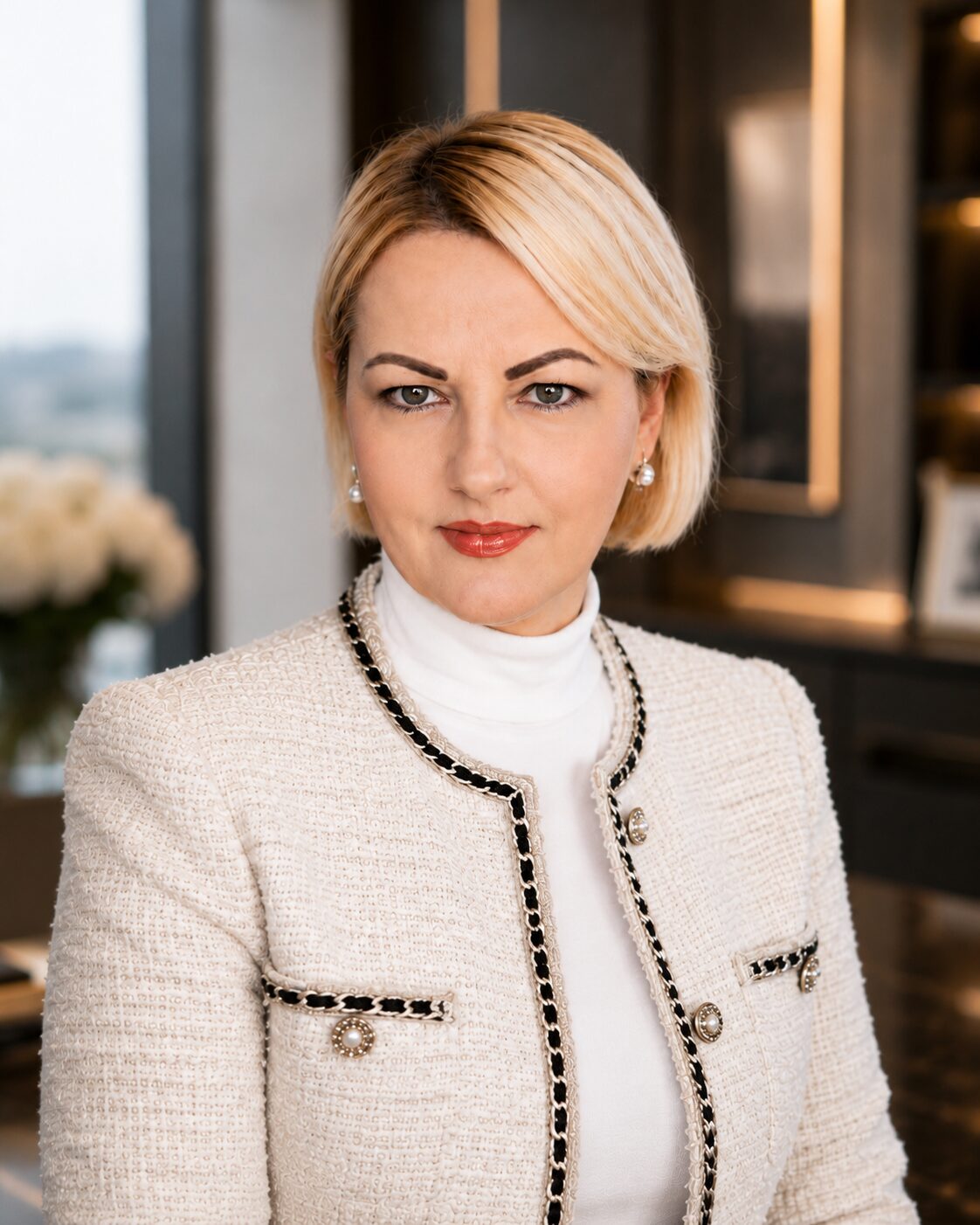
About the Author
Inga Barkauskaite — founder and entrepreneur.
Founder of Mega Commercial Enterprises Limited, an Ireland-registered company building and operating independent digital businesses. More than two decades across business leadership, international advisory, regulated environments, university lecturing and company ownership, in the United States, Europe and international markets. Three U.S. degrees: BSc Management, MBA, and a Master of Taxation.
Keep Reading
Related writing.
Three pieces that follow directly from this one.



Let’s Connect
If this is useful to you, tell me.
I read everything that arrives. For founder conversations, partnerships and strategic collaboration, this is the way to reach me.